Kitchen appliances have evolved considerably over the past decade, and few categories illustrate this shift better than the multi-cooker. What was once a specialty item reserved for adventurous home cooks has become a mainstay in kitchens across the country. Among the many options available, the Instant Pot Duo Plus 8-Quart stands out as a widely recognized example of the 9-in-1 electric pressure cooker format. This article explores what this type of appliance offers, how it fits into everyday cooking routines, and what factors are worth thinking about before bringing one into your kitchen.
Whether you’re new to multi-cookers or considering an upgrade from a smaller model, understanding the mechanics, features, and practical applications of this appliance can help you make a more informed decision about whether it aligns with your cooking habits and household needs.
What Is the Instant Pot Duo Plus 8-Quart?
The Duo Plus 8-Quart belongs to a category of kitchen appliances designed to consolidate multiple cooking functions into a single countertop unit. Rather than owning a separate pressure cooker, slow cooker, rice cooker, steamer, and yogurt maker, this appliance combines nine functions into one stainless steel pot. The 8-quart capacity places it on the larger end of the Instant Pot lineup, making it a consideration for bigger households, meal preppers, or anyone who regularly cooks in bulk.
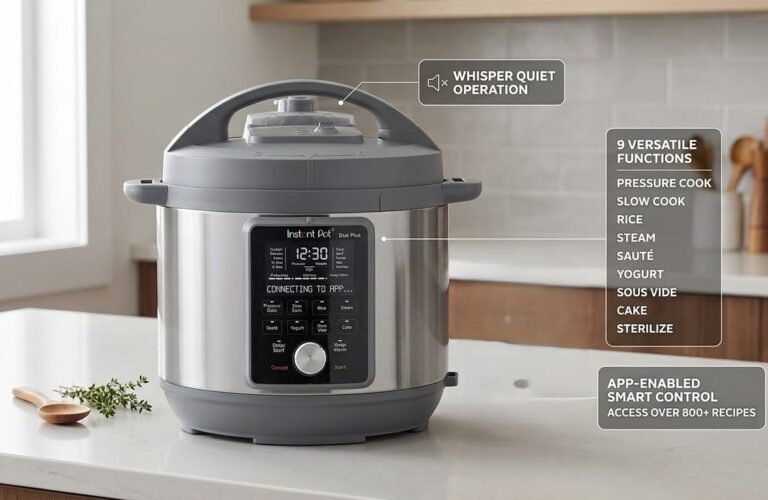
The “Whisper Quiet” branding refers to the appliance’s steam release mechanism, which is designed to operate with reduced noise compared to earlier generations of pressure cookers. This can matter more than people initially expect, particularly in open-concept homes or apartments where kitchen noise travels into living spaces.
Key Features
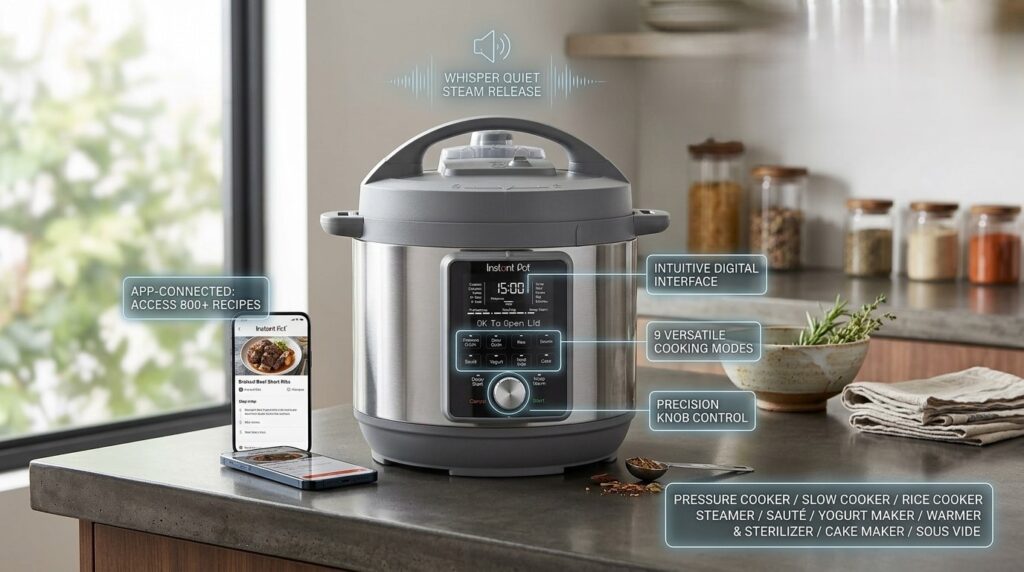
Nine Cooking Functions in One Appliance
The core appeal of this type of multi-cooker lies in its versatility. The nine functions typically include pressure cooking, slow cooking, rice cooking, steaming, sautéing, yogurt making, warming, sterilizing, and a sous vide-adjacent or cake-making function depending on the specific model configuration. This consolidation is intended to reduce the number of individual appliances a household needs to store and maintain.
Stainless Steel Inner Pot
The inner cooking pot is constructed from stainless steel, a material commonly chosen for its durability and resistance to staining or reacting with acidic foods. Stainless steel pots are generally dishwasher safe, which can simplify cleanup after cooking.
App Connectivity and Recipe Access
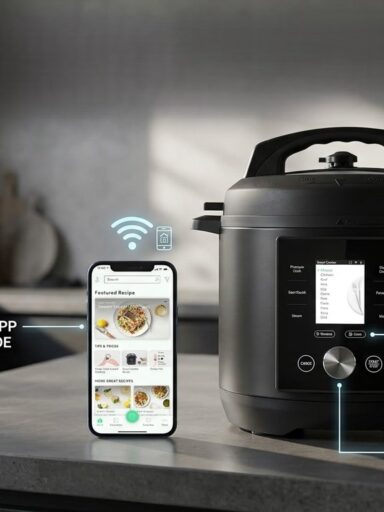
One of the more modern additions to this appliance is companion app support, which reportedly provides access to a large recipe library exceeding 800 options. This feature is designed to help users, particularly those newer to pressure cooking, find guided recipes with specific settings rather than relying solely on trial and error.
Safety Mechanisms
Electric pressure cookers in this category typically include multiple built-in safety features, such as lid-locking mechanisms that prevent the lid from opening while the unit is pressurized, overheat protection, and automatic pressure release systems. These safeguards are a significant part of why modern electric pressure cookers have gained wider consumer trust compared to older stovetop pressure cooker designs.
Digital Control Panel
Rather than manual dials, this appliance typically uses a digital interface with pre-programmed settings for common foods like rice, beans, soup, and meat. Users can often adjust cooking time and pressure levels manually as well, offering flexibility for both beginners and more experienced cooks.
Delay Start and Keep Warm Functions
Many multi-cookers in this category include a delay start timer, allowing ingredients to be added in advance and cooking to begin at a scheduled time. A keep-warm function automatically activates after cooking completes, which can be useful for meal timing around varying schedules.
How It Can Be Used
Everyday Meal Preparation
For many households, the primary use case is straightforward weeknight cooking. Dishes that traditionally require hours of stovetop attention—such as stews, braised meats, or bean-based dishes—can often be prepared in a fraction of the time using the pressure cooking function. This doesn’t mean the appliance eliminates all prep work, but it can significantly reduce active cooking time.
Batch Cooking and Meal Prep
Given the 8-quart capacity, this size is often chosen by individuals who cook in larger batches, whether for meal prepping throughout the week or feeding a larger family. Larger capacity pots allow for cooking bigger cuts of meat, larger volumes of grains, or bigger batches of soup without needing to cook in multiple rounds.
Rice and Grain Cooking
The rice cooker function can serve as a replacement for a standalone rice cooker, which may appeal to those looking to reduce countertop clutter. This function typically works well for white rice, brown rice, and other grains like quinoa, though cooking times and water ratios may need adjustment based on the specific grain.
Yogurt Making
The yogurt function allows users to make homemade yogurt by maintaining a consistent low temperature over an extended period, which supports the fermentation process. This can appeal to individuals interested in reducing food packaging waste or customizing yogurt ingredients and sweetness levels.
Steaming Vegetables and Seafood
Using the included steaming rack (if provided) or a separately purchased steamer basket, the appliance can steam vegetables, dumplings, seafood, and other foods that benefit from gentler, moisture-retaining cooking methods.
Sautéing Before Pressure Cooking
The sauté function allows users to brown meat or cook aromatics like onions and garlic directly in the pot before switching to pressure cooking mode. This can streamline recipes that would otherwise require using a separate pan, reducing the number of dishes to wash.
Slow Cooking for Traditional Recipes
For those who prefer the traditional slow-cooked texture and flavor development of dishes like pulled pork or chili, the slow cook function offers an alternative to pressure cooking, allowing for longer, low-temperature cooking similar to a conventional slow cooker.
Sterilizing Baby Bottles or Canning Jars
The sterilize function is sometimes used by parents to sterilize baby bottles, pacifiers, or other feeding equipment, as well as by home canners looking to sterilize jars before use.
Who It May Be Suitable For
Larger Households
The 8-quart size is generally better suited to families of four or more, or households that regularly host gatherings, compared to the smaller 3-quart or 6-quart models, which tend to suit individuals or smaller families.
Meal Preppers and Batch Cooks
Those who cook large quantities of food at once—whether for weekly meal prep, freezer meals, or feeding a large family—may find the extra capacity useful for reducing the number of cooking cycles needed.
Individuals Consolidating Kitchen Appliances
People looking to reduce the number of individual appliances in their kitchen, such as separate rice cookers, slow cookers, and steamers, may find value in a multi-function unit that combines these capabilities into one device.
Those New to Pressure Cooking
The inclusion of an app with a large recipe database may appeal to individuals who are unfamiliar with pressure cooking and want structured guidance rather than needing to research settings and cook times independently.
Households With Limited Counter or Storage Space
While the appliance itself takes up a reasonable footprint, consolidating multiple functions into one device can still be more space-efficient than storing several single-purpose appliances separately.
Important Things to Consider
Counter and Storage Space
An 8-quart unit is physically larger than smaller Instant Pot models, and it’s worth measuring available counter or cabinet space beforehand, particularly for kitchens with limited storage.
Learning Curve for Pressure Cooking
While the appliance is designed to be more approachable than traditional stovetop pressure cookers, there is still a learning curve involved in understanding cook times, liquid ratios, and pressure release methods (natural release versus quick release) for different types of food.
Recipe Adjustment May Be Necessary
Not all traditional recipes translate directly to pressure cooking without adjustment. Liquid amounts, in particular, often need to be modified since pressure cookers require sufficient liquid to build steam, and the cooking environment is different from open-pot stovetop cooking.
Maintenance of Seals and Gaskets
The sealing ring, which creates the airtight environment necessary for pressure cooking, requires regular cleaning and periodic replacement. Over time and with repeated use, the ring may need to be replaced to maintain proper sealing function.
App Dependency for Full Recipe Access
While the appliance can be used entirely without the companion app, accessing the full recipe library and certain guided features does require app connectivity, which may not appeal to those who prefer fully offline appliance operation.
Noise During Steam Release
While marketed as quieter than earlier models, some steam release noise is inherent to how pressure cookers function, and expectations around “whisper quiet” branding should be tempered with the understanding that some sound will still occur during depressurization.
Comparing General Appliance Categories
To provide helpful context, it’s worth briefly comparing multi-cookers like this one to other general categories of kitchen appliances, without making direct claims about specific competing products.
Standalone Pressure Cookers vs. Multi-Cookers: Traditional stovetop pressure cookers generally offer a single function and require more hands-on monitoring. Electric multi-cookers, by contrast, automate much of the pressure regulation process and add multiple additional cooking functions, though they typically come at a higher price point and require counter space for a dedicated appliance.
Slow Cookers vs. Multi-Cookers: Dedicated slow cookers are often simpler to operate and may have larger capacity options at lower price points, but they lack the time-saving benefits of pressure cooking and don’t typically include functions like sautéing or yogurt making.
Rice Cookers vs. Multi-Cookers: Standalone rice cookers are often more specialized and may produce more consistent results specifically for rice, since that is their singular purpose. Multi-cookers offer broader functionality but may require more experimentation to achieve the same rice consistency.
Instant Pot Duo Plus vs. Other Instant Pot Models: Within the Instant Pot lineup itself, models vary primarily by size, number of functions, and additional features like app connectivity or sous vide capability. The Duo Plus generally sits in the mid-to-upper range of the lineup in terms of features, without reaching into the higher-end smart or ultra models.
Frequently Asked Questions
Is the 8-quart size necessary, or would a smaller model work? This depends largely on household size and cooking habits. Smaller households or those cooking primarily for one to two people may find a 6-quart or smaller model more practical, while larger families or frequent batch cooks may benefit from the additional capacity.
Can this appliance replace all other kitchen appliances mentioned in its functions? While it’s designed to perform the functions of a slow cooker, rice cooker, steamer, and more, results may vary compared to dedicated single-purpose appliances, particularly for specialized tasks like rice cooking, where dedicated rice cookers are often fine-tuned for that singular purpose.
Do I need the app to use the appliance? No, the appliance can generally be operated using its built-in control panel and pre-programmed settings without connecting to the app. The app primarily expands recipe access and, in some models, offers guided cooking features.
Is pressure cooking safe for regular home use? Modern electric pressure cookers include multiple safety mechanisms, including lid locks and pressure release systems, that are designed to reduce risks associated with pressure cooking compared to older stovetop models. As with any kitchen appliance, following the manufacturer’s instructions is important.
How long does the sealing ring typically last? This varies based on usage frequency, but many manufacturers recommend replacing the sealing ring periodically, particularly if it becomes cracked, warped, or begins to retain odors from previous cooking sessions.
Can this be used for canning? Electric pressure cookers, including Instant Pot models, are generally not recommended for pressure canning, as they may not reach or maintain the specific pressure levels required for safe canning of low-acid foods according to USDA guidelines. It’s advisable to check current manufacturer guidance on this topic.
Final Thoughts
The Instant Pot Duo Plus 8-Quart represents a widely used example of the modern multi-cooker category, combining several kitchen functions into a single stainless steel appliance. For households that cook in larger volumes, want to consolidate multiple appliances into one, or are interested in exploring pressure cooking with app-guided recipes, this type of product may fit well into an existing kitchen routine.
As with any kitchen appliance investment, it’s worth considering your household size, available storage space, and cooking habits before deciding whether this particular size and feature set aligns with your needs. Reading the manufacturer’s specifications and safety guidelines thoroughly can also help set realistic expectations for how the appliance performs across its various functions.