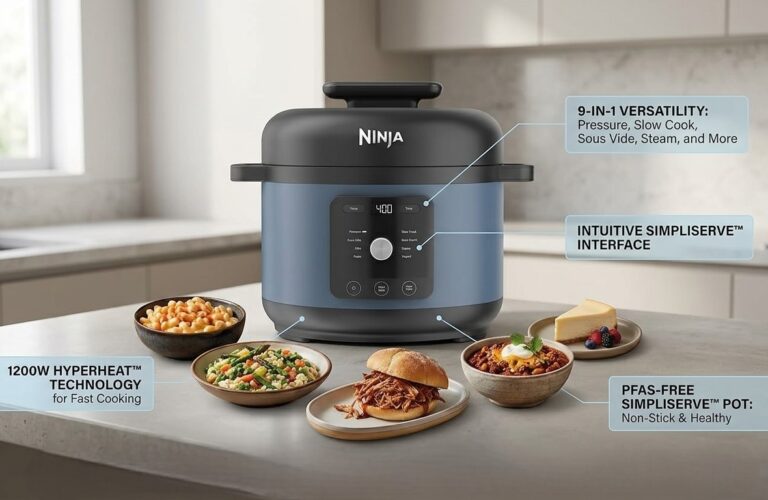
Kitchen appliances have gone through a quiet revolution over the last decade. What used to require five or six separate gadgets—a pressure cooker, a slow cooker, a steamer, a sauté pan, and a sous vide setup—can now often be handled by a single countertop unit. The Ninja HyperHeat 9-in-1 Pressure Cooker (model PC201, 6.5-quart, Blue Macaron finish) is one of the newer entries in this category, and it’s worth taking a closer look at what it actually offers, how it fits into everyday cooking routines, and what people considering it might want to think about before making a decision.
This article walks through the appliance’s features, practical applications, and the kinds of households that tend to benefit most from multi-function cookers like this one. It’s meant to be informational rather than promotional, so you can form your own view based on the details rather than marketing language.
Introduction
Multi-cookers occupy an interesting space in the kitchen appliance world. They’re not trying to replace a full stove or oven, but they aim to consolidate several everyday cooking tasks into one device, saving both counter space and the mental overhead of juggling multiple tools. The Ninja HyperHeat 9-in-1 Pressure Cooker fits squarely into this category, combining pressure cooking, searing, sautéing, slow cooking, steaming, and even sous vide functionality into a single 6.5-quart pot.
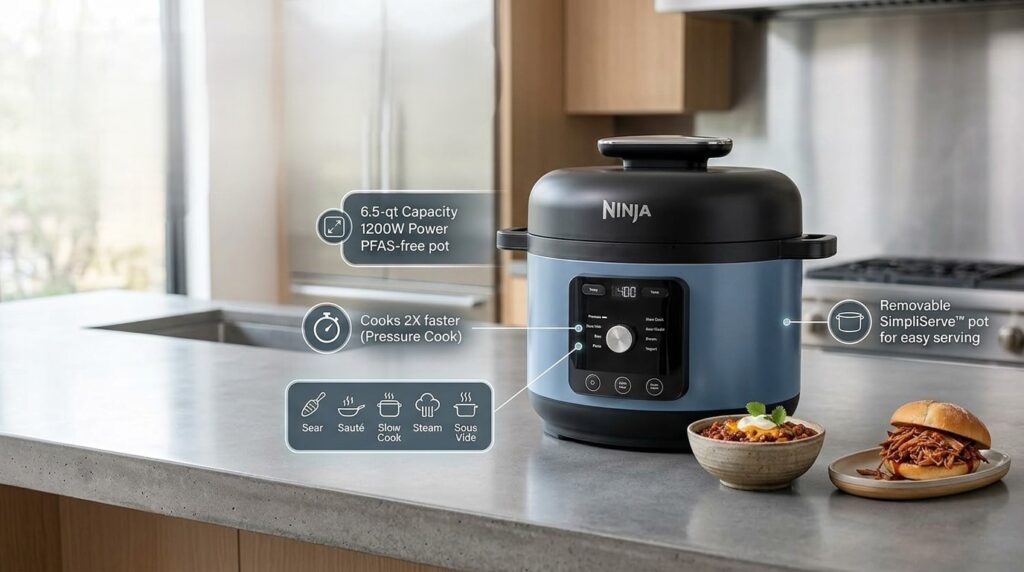
What sets this particular model apart, at least on paper, is Ninja’s HyperHeat technology, which the brand describes as enabling faster heat-up times compared to standard pressure cookers. The company states that this can help meals come together roughly twice as fast in certain cooking modes. There’s also a notable design choice: a removable SimpliServe pot, which is meant to make transferring food from cooker to table easier, and a PFAS-free pot coating, which has become an increasingly important consideration for buyers paying closer attention to cookware materials.
Below, we’ll break down what this appliance does, how people might realistically use it, and who tends to get the most value out of a multi-cooker like this.
Key Features
HyperHeat Technology
The defining feature of this model is its HyperHeat system, which uses a 1200-watt heating element designed to bring the pot up to pressure or cooking temperature more quickly than conventional electric pressure cookers. In practical terms, this is meant to shave time off the “come to pressure” phase of cooking, which is often the slowest part of using a pressure cooker. Faster preheating can matter quite a bit on a weeknight when every extra minute counts.
Nine Cooking Functions in One Unit
The “9-in-1” designation refers to the range of cooking modes built into the appliance. These typically include:
- Pressure cooking (for beans, stews, tough cuts of meat, and grains)
- Searing and browning (useful for building flavor before pressure cooking or slow cooking)
- Sautéing (for vegetables, aromatics, or finishing sauces)
- Slow cooking (for low-and-slow dishes like pulled pork or chili)
- Steaming (for vegetables, dumplings, or seafood)
- Sous vide (for precise, temperature-controlled cooking)
- Additional modes that may include rice cooking, yogurt making, or warming functions, depending on the specific configuration
Having this many functions in one appliance means fewer devices cluttering cabinets and countertops, which is part of the broader appeal of multi-cookers generally.
6.5-Quart Capacity
The 6.5-quart pot size sits in a fairly versatile middle ground. It’s large enough to prepare meals for a family of four to six people, while still being manageable in terms of storage and countertop footprint. This capacity tends to work well for batch cooking, meal prepping, or preparing a main dish alongside a side in stages.
SimpliServe Removable Pot
One detail that stands out is the SimpliServe pot design, which allows the inner cooking vessel to be lifted out and brought directly to the table. This can be a small but meaningful convenience, particularly for dishes like soups, stews, or braises where transferring hot contents from an inner pot to a separate serving dish can be cumbersome and messy.
PFAS-Free Construction
Consumer awareness around non-stick coatings and the chemicals used in them has grown substantially. This model’s pot is built without PFAS (per- and polyfluoroalkyl substances), which are a class of synthetic chemicals that have drawn scrutiny in recent years due to environmental and health concerns. For buyers who prioritize this aspect when choosing cookware, it’s a relevant detail to be aware of.
Sous Vide Functionality
Sous vide cooking—which involves cooking food in a sealed bag at a precise, consistent low temperature—typically requires a dedicated immersion circulator and a separate container. Having this function built into a multi-cooker can make the technique more accessible to home cooks who might not otherwise invest in specialized sous vide equipment.
How It Can Be Used
Because this appliance covers so many cooking methods, it’s worth walking through some concrete examples of how someone might use it in a typical week.
Weeknight Meals
For busy evenings, the pressure cooking function paired with HyperHeat’s faster preheating can be useful for dishes that would otherwise take much longer using conventional stovetop methods—things like risotto, chili, braised chicken thighs, or a pot of beans that hasn’t been soaked overnight.
Batch Cooking and Meal Prep
The 6.5-quart capacity lends itself well to preparing larger batches of grains, proteins, or stews that can be portioned out over several days. Slow cooking a large batch of pulled chicken or turkey chili on a Sunday, for instance, is a common approach for people trying to streamline weekday meals.
Building Layered Flavor
The searing and sautéing functions allow users to brown meat or cook down onions and garlic directly in the pot before switching to pressure cooking or slow cooking. This eliminates the need to dirty a separate skillet, which is a small but genuinely useful time-saver.
Steaming Vegetables or Seafood
The steaming function can be used for a wide range of foods, from broccoli and asparagus to fish fillets or dumplings, offering a gentler cooking method that preserves texture and nutrients better than boiling in many cases.
Precision Cooking with Sous Vide
For those interested in more technique-driven cooking, the sous vide function opens the door to precisely cooked proteins—steak brought to an exact internal temperature, for example, or perfectly poached eggs—without needing to buy a separate immersion circulator.
Making Yogurt or Warm Holding
If the model includes a yogurt-making function, this can be used to culture homemade yogurt overnight, a task that some dedicated yogurt makers are built for but that a multi-cooker can often replicate. Warming functions, meanwhile, are handy for keeping a finished dish at serving temperature during a gathering.
Who It May Be Suitable For
Multi-cookers like this one tend to appeal to a fairly broad range of people, though certain groups may find it particularly useful.
Busy households and working professionals often gravitate toward appliances that reduce active cooking time. The combination of faster preheating and multiple functions in one pot can help streamline dinner prep on weeknights.
Small to medium-sized families may appreciate the 6.5-quart capacity, which is generally enough to feed four to six people without being unwieldy to store or clean.
People downsizing their kitchen equipment — whether due to limited counter space, a smaller kitchen, or a general preference for fewer single-purpose gadgets — might find value in consolidating several appliances into one unit.
Home cooks interested in expanding their techniques, particularly those curious about sous vide cooking but hesitant to invest in a dedicated setup, may find the built-in function to be a reasonably low-commitment way to experiment.
Buyers who are mindful of cookware materials and specifically looking for PFAS-free options will likely find that detail relevant to their decision-making process.
That said, this type of appliance may be less appealing to people who already own a full complement of dedicated single-purpose cookers and don’t feel the need to consolidate, or to those cooking for very large groups who might find a 6.5-quart capacity limiting.
Important Things to Consider
No appliance is a perfect fit for everyone, and there are a few practical points worth thinking through before deciding whether this model suits your needs.
Counter Space and Storage
While consolidating multiple appliances into one unit does save space overall, the cooker itself still has a footprint, and its various accessories (racks, sous vide components, lids) may require additional storage room.
Learning Curve
Multi-function appliances with nine or more modes can take some time to get comfortable with, particularly for cooks who are new to pressure cooking or sous vide techniques. Reading through the manual and starting with simpler recipes is generally a good approach before attempting more ambitious dishes.
Cleaning and Maintenance
Removable pots, like the SimpliServe design, tend to make cleanup easier, but it’s still worth checking whether components are dishwasher-safe or require hand washing, and how easy the sealing ring and lid are to clean thoroughly after use.
Capacity Limitations
A 6.5-quart pot works well for most households, but those regularly cooking for large groups or doing significant batch cooking for freezing may find themselves needing to cook in multiple rounds.
Power and Electrical Considerations
At 1200 watts, this appliance draws a meaningful amount of power, which is generally standard for this category but worth noting if you’re using it alongside other high-wattage kitchen appliances on the same circuit.
Compatibility with Existing Routines
If you already rely heavily on a slow cooker, pressure cooker, or sous vide setup that you’re happy with, it’s worth considering whether consolidating into one appliance actually simplifies your routine or just adds a new learning curve without meaningful benefit.
Comparing General Categories of Cooking Appliances
Rather than comparing specific brands, it can be helpful to think about the broader categories of cooking equipment this type of product intersects with.
Dedicated single-function appliances (a standalone slow cooker, a standalone pressure cooker, a standalone sous vide circulator) often excel at their one job and can sometimes offer more capacity or specialized features within that specific function. The tradeoff is needing multiple devices, more storage space, and more individual pieces to clean and maintain.
Multi-cookers, as a category, aim to strike a balance between convenience and capability. They generally perform each function competently rather than exceptionally, which is a reasonable tradeoff for many home cooks who value versatility and space-saving over specialized performance in any single mode.
Traditional stovetop and oven cooking remains the most flexible option in terms of technique and control, but it typically requires more hands-on attention and doesn’t offer the “set it and walk away” convenience that pressure cooking or slow cooking modes provide.
Ultimately, the right choice depends on how much you value consolidation and convenience versus specialized performance in any one cooking method.
Frequently Asked Questions
Does this appliance replace the need for a separate slow cooker or steamer? For many households, yes—the built-in slow cooking and steaming functions are designed to handle tasks that a dedicated appliance would otherwise perform. Whether it fully replaces a specialized device depends on how frequently you use those functions and how particular you are about specific features a standalone unit might offer.
Is sous vide cooking through this appliance the same as using a dedicated immersion circulator? The built-in sous vide function is designed to offer similar temperature-controlled cooking, though the exact temperature range, precision, and water capacity may differ from a dedicated circulator paired with a separate container. It’s worth checking the specific temperature range and capacity details if sous vide is a priority use case for you.
What does PFAS-free mean for the cooking pot? It means the pot’s surface is manufactured without per- and polyfluoroalkyl substances, a category of chemicals historically used in some non-stick coatings that has raised environmental and health concerns. This is generally seen as a positive attribute by buyers who are specifically looking to avoid these substances in their cookware.
How does the HyperHeat technology affect cooking time? According to the manufacturer, the HyperHeat system is designed to heat up faster than standard pressure cookers, which can reduce the overall time it takes for a dish to reach cooking pressure. Actual time savings will vary depending on the recipe and quantity of food being cooked.
Is the 6.5-quart size enough for meal prepping? For most individuals or families preparing meals for four to six people, or batch cooking for a few days at a time, 6.5 quarts tends to be a workable capacity. Those cooking for larger households or doing extensive freezer meal prep may want to plan for cooking in batches.
Can the inner pot go in the dishwasher? Dishwasher compatibility can vary depending on the specific accessory or component, so it’s a good idea to check the care instructions included with the unit rather than assuming all parts are dishwasher-safe.
Conclusion
The Ninja HyperHeat 9-in-1 Pressure Cooker represents a fairly comprehensive approach to kitchen appliance consolidation, bringing together pressure cooking, searing, sautéing, slow cooking, steaming, and sous vide functionality into a single 6.5-quart unit. Features like the HyperHeat technology, the PFAS-free pot construction, and the removable SimpliServe design each address specific practical concerns that many home cooks think about—speed, material safety, and ease of serving, respectively.
Whether this particular appliance is the right fit really comes down to your own cooking habits, kitchen space, and how much you value having multiple functions built into one device versus maintaining separate specialized tools. For those drawn to the idea of simplifying their kitchen setup while still having access to a wide range of cooking techniques, it’s a model worth learning more about.