Kitchen appliances have gone through a quiet revolution over the past decade. Where a home cook once needed a rice cooker, a slow cooker, a steamer, and a stovetop pressure cooker taking up cabinet space, many households now rely on a single multi-functional device to handle most of that work. The Cosori 6QT Pressure Cooker, marketed as a 9-in-1 unit with a ceramic-coated pot and a set of built-in safety mechanisms, fits into this category of consolidated kitchen tools. This article walks through what the appliance offers, how it might fit into different cooking routines, and what to think about before deciding whether it matches your needs.
Introduction
Multi-cookers occupy an interesting space in the small appliance market. They’re not trying to replace a full kitchen setup, but they aim to reduce the number of single-purpose gadgets that often end up gathering dust after the first few uses. The Cosori 6QT model enters this space with a combination of pressure cooking, slow cooking, rice cooking, sautéing, and even sous vide functionality built into one unit.
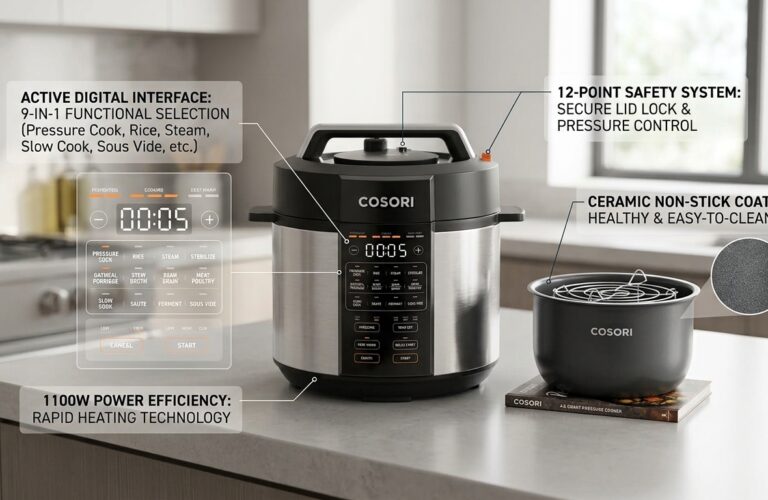
The “9-in-1” label refers to the range of cooking modes packed into the appliance, while the ceramic coating on the inner pot is worth noting separately, since many multi-cookers still rely on traditional non-stick coatings that some households prefer to avoid. Combined with a stated 12 safety features and a 1100-watt heating element, this appliance is positioned for people who want flexibility without juggling several countertop devices.
This article is meant to give you a grounded, informational look at what this type of product typically offers — not a sales pitch, but a practical breakdown of features, use cases, and considerations that can help you decide whether it aligns with how you actually cook.
Key Features
9-in-1 Functionality
The core selling point of this appliance is its versatility. Rather than being limited to just pressure cooking, the unit is designed to also function as:
- A rice cooker for grains like white rice, brown rice, and quinoa
- A slow cooker for stews, braises, and dishes that benefit from long, low-temperature cooking
- A sauté station for browning meat or softening vegetables before combining them with other ingredients
- A steamer for vegetables, dumplings, or seafood
- A sous vide device for precise, low-temperature water-bath cooking
- A yogurt maker, which is a feature increasingly common in higher-end multi-cookers
- A warming function to keep finished food at serving temperature
Having this many modes in a single unit means less counter clutter and fewer appliances to store, clean, and maintain. That said, it’s worth understanding that a multi-function device is often a trade-off between convenience and the specialized performance of dedicated single-purpose appliances — something we’ll touch on later in the comparison section.
Ceramic-Coated Inner Pot
One detail that distinguishes this model from many competitors is the ceramic coating on the inner cooking pot, as opposed to the more common non-stick coatings that rely on PTFE-based compounds. Ceramic coatings are generally marketed as a chemical-free alternative, and many consumers specifically look for this feature when they want to reduce potential off-gassing at high heat or avoid certain non-stick chemical compounds altogether.
Ceramic-coated pots also tend to distribute heat differently than plain stainless steel, which can be beneficial for dishes that require even cooking, such as risottos or dishes with dairy that might otherwise scorch.
Stainless Steel Exterior in Silver
The exterior housing is built with a stainless steel finish in a silver colorway, which tends to blend easily into most kitchen aesthetics, whether the surrounding appliances are stainless, black, or a mix of finishes. Stainless steel exteriors are also generally easier to wipe down compared to plastic housings, which can show fingerprints or discoloration more readily over time.
12 Built-In Safety Features
Pressure cookers, by nature of how they operate, have historically had a reputation for safety concerns, largely tied to older stovetop models. Modern electric pressure cookers have addressed most of these issues through engineering improvements, and this model reportedly includes 12 distinct safety mechanisms. While the specific list of these features would need to be confirmed on the product listing itself, common safety mechanisms found in this appliance category typically include:
- Pressure release valves that prevent the lid from opening while the unit is still pressurized
- Overheat protection that shuts off the heating element if internal temperatures exceed safe thresholds
- Lid-locking mechanisms that keep the unit sealed during operation
- Anti-blockage vents to prevent food particles from clogging the steam release
These kinds of features are worth paying attention to, particularly for households that are newer to pressure cooking and want reassurance that the appliance is designed with multiple layers of protection.
1100-Watt Heating Element
The wattage of a multi-cooker affects how quickly it can build pressure, heat liquids, or maintain a steady simmer. At 1100 watts, this unit falls into a fairly standard range for a 6-quart multi-cooker, generally enough to bring dishes up to pressure or a simmer in a reasonable amount of time without requiring an unusually high energy draw.
6-Quart Capacity
A 6-quart capacity is often described as a middle-ground size — big enough to prepare meals for a small to medium-sized household, or to batch-cook meals for the week, but not so large that it becomes unwieldy on a countertop or difficult to store in a cabinet. For reference, 6 quarts is typically enough to prepare a whole chicken, a pot of chili for four to six servings, or several cups of rice at once.
How It Can Be Used
Understanding the functional range of this appliance is one thing, but thinking through actual use cases can help clarify whether it fits your routine.
Weeknight Meal Preparation
One of the more practical applications of a pressure cooker function is dramatically reducing cooking times for foods that typically take a long while on the stovetop. Dried beans, tough cuts of meat, and root vegetables are all examples of ingredients that can go from raw to fully cooked in a fraction of the time compared to conventional methods.
Batch Cooking and Meal Prep
For people who like to prepare food in bulk for the week, the slow cook and pressure cook functions can both be used to produce large batches of soups, stews, grains, or shredded meats that can be portioned out and refrigerated or frozen.
Rice and Grain Cooking
The dedicated rice cooker setting can simplify the process of preparing rice, quinoa, or similar grains without needing to monitor a pot on the stove. This is particularly useful for households that eat rice or grains frequently as a dietary staple.
Sous Vide Cooking
Sous vide is a cooking method that involves sealing food in a bag and cooking it in a precisely controlled water bath, often resulting in more evenly cooked proteins compared to traditional methods. Having this function built into a multi-cooker means people curious about sous vide cooking don’t necessarily need to purchase a separate immersion circulator to experiment with the technique.
Yogurt Making
Making yogurt at home requires maintaining a consistent low temperature over several hours, which can be difficult to manage without dedicated equipment. The yogurt function on this type of appliance is designed to hold that steady temperature automatically, which can make homemade yogurt more accessible for people who want to reduce reliance on store-bought products.
Sautéing Before Pressure Cooking
Many recipes call for browning meat or aromatics before adding liquid and pressure cooking. Having a built-in sauté function means this step can happen directly in the same pot, without dirtying a separate pan — a detail that can meaningfully cut down on cleanup time.
Who It May Be Suitable For
Not every appliance fits every household, and it’s worth thinking through who tends to benefit most from a multi-cooker like this one.
People consolidating kitchen appliances. If your kitchen currently has a rice cooker, slow cooker, and pressure cooker taking up separate spaces, a 9-in-1 unit might help reduce that footprint, provided you’re comfortable with the trade-offs of a multi-function device (discussed below).
Households interested in reducing non-stick chemical exposure. The ceramic coating may appeal specifically to those who’ve been looking for alternatives to traditional PTFE-based non-stick cookware.
People new to pressure cooking. The emphasis on multiple safety features may offer some reassurance for those who are hesitant about pressure cooking due to unfamiliarity or past experiences with older stovetop models.
Home cooks interested in exploring sous vide. Rather than investing in a separate immersion circulator, curious cooks can test the technique using an appliance they already own.
Small to medium households. The 6-quart size is generally suited to smaller families or individuals who want to batch-cook, rather than very large households that might need bigger capacity appliances.
This appliance may be less suitable for people who specifically want dedicated, single-purpose equipment for professional-level results in one particular cooking style, such as serious sous vide enthusiasts who want more precise temperature control than a multi-function device typically offers.
Important Things to Consider
Learning Curve
Multi-function appliances often come with a learning curve, particularly for people who haven’t used a pressure cooker or programmable multi-cooker before. Reading through the included manual and understanding how the different functions and settings work is generally recommended before diving into more complex recipes.
Counter and Storage Space
While consolidating appliances can save space overall, a 6-quart multi-cooker is still a fairly substantial countertop item. It’s worth measuring your available space, both for daily counter use and for storage if you don’t plan to keep it out permanently.
Cleaning and Maintenance
Ceramic coatings, while often marketed as durable, can still be sensitive to certain cleaning methods. Using metal utensils or abrasive scrubbers may affect the coating’s longevity over time, so many manufacturers recommend gentler cleaning tools to preserve the non-stick surface. It’s advisable to check the specific care instructions included with the product.
Sous Vide Precision
While having sous vide capability built into a multi-cooker is a nice bonus, it’s worth setting realistic expectations. Dedicated sous vide immersion circulators are generally designed with more precise temperature regulation than an all-purpose multi-cooker, so serious sous vide cooking might still benefit from specialized equipment.
Replacement Parts and Accessories
Over time, gaskets, sealing rings, and other components in pressure cookers may need replacing due to normal wear. It can be helpful to check whether replacement parts are readily available for the specific model before making a decision, particularly if you plan to use the appliance frequently.
Comparison of General Categories
Rather than comparing this product directly against named competitors, it can be more useful to understand how multi-cookers generally compare to other categories of kitchen appliances.
Multi-cookers vs. Single-Function Appliances Single-function appliances, such as a dedicated rice cooker or slow cooker, are often simpler to operate and may be optimized specifically for their one task. Multi-cookers trade some of that specialization for convenience and reduced kitchen footprint, which can be a worthwhile trade-off depending on your cooking habits and available space.
Ceramic-Coated Pots vs. Traditional Non-Stick Pots Ceramic coatings are generally chosen by consumers who want to avoid PTFE-based non-stick materials, though both types of coatings can wear over time with heavy use or improper cleaning. Stainless steel inner pots, found in some other multi-cookers, tend to be more durable long-term but often require more attention to prevent food from sticking.
Electric Pressure Cookers vs. Stovetop Pressure Cookers Stovetop pressure cookers generally reach higher pressure levels and can cook slightly faster, but they require more hands-on monitoring. Electric pressure cookers, like this one, tend to prioritize convenience and programmability, often at a slight trade-off in cooking speed compared to stovetop counterparts.
Frequently Asked Questions
Is this appliance suitable for someone who has never used a pressure cooker before? Many electric pressure cookers are designed with beginners in mind, particularly those with multiple built-in safety mechanisms and programmable settings that reduce the guesswork involved in traditional stovetop pressure cooking. That said, it’s still worth reading through the manual thoroughly before first use.
Can this replace a dedicated rice cooker? For most everyday rice cooking needs, a multi-cooker with a rice function can generally produce results comparable to a basic dedicated rice cooker. However, those with very specific preferences around rice texture might find dedicated rice cookers offer more fine-tuned settings.
Does the ceramic coating affect cooking performance? Ceramic coatings generally distribute heat evenly and reduce sticking, though performance can vary based on how the pot is used and maintained over time.
Is sous vide cooking with this appliance comparable to using a dedicated immersion circulator? It can be a reasonable way to experiment with the technique, though dedicated sous vide equipment is typically designed for more precise and consistent temperature control over extended cooking periods.
How much food can a 6-quart multi-cooker typically prepare? A 6-quart capacity is generally enough for small to medium households, often accommodating meals for two to six people depending on the dish being prepared.
What kind of maintenance does this type of appliance typically require? Regular cleaning of the inner pot, sealing ring, and lid components is generally recommended, along with periodically checking for wear on the sealing ring, which may need replacement over time depending on frequency of use.
Conclusion
The Cosori 6QT 9-in-1 Pressure Cooker represents a fairly comprehensive approach to appliance consolidation, combining pressure cooking, slow cooking, rice preparation, sautéing, steaming, sous vide, and yogurt-making functions into a single unit. Its ceramic-coated pot and stated 12 safety features may appeal to households looking for both convenience and some peace of mind around pressure cooking, particularly those newer to the method.
As with any multi-function appliance, it’s worth weighing the convenience of consolidation against the specialized performance of dedicated single-purpose devices, and considering factors like counter space, cleaning requirements, and how often you’d realistically use each of its nine functions.