Kitchen appliances have come a long way from the single-purpose gadgets that used to crowd our cabinets. Today’s cooks are looking for tools that do more with less counter space, and multi-cookers have become one of the most popular answers to that demand. Among the many options on the market, the COMFEE’ 12-in-1 Electric Pressure Cooker with its 6-quart nonstick pot has drawn attention from home cooks who want flexibility without complexity. This article walks through what this appliance offers, how it might fit into different kitchens and lifestyles, and what to think about before deciding whether it’s the right addition to your cooking routine.
Introduction
Electric pressure cookers occupy an interesting space in modern kitchens. They promise to combine the functions of several appliances—a slow cooker, a rice cooker, a steamer, a sauté pan, and more—into a single unit. The idea is straightforward: instead of owning five or six specialized gadgets, you own one machine that adapts to different cooking methods depending on what you’re preparing. The COMFEE’ 12-in-1 model fits into this category, positioning itself as a versatile countertop appliance for people who want to streamline their cooking process.
This particular model comes with a 6-quart capacity, which tends to be a popular middle-ground size for households ranging from individuals who like to batch cook to families of four or five. Understanding what a product like this can realistically do—and where its limitations might lie—can help you make a more informed decision about whether it belongs in your kitchen.
Key Features
Multiple Cooking Functions in One Unit
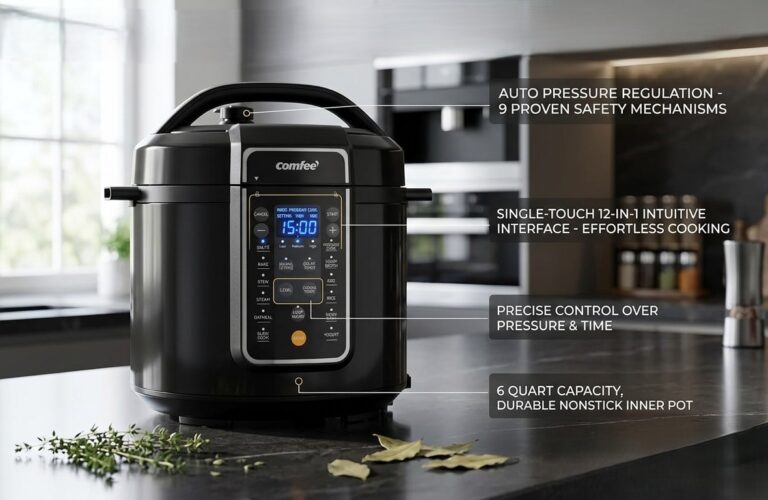
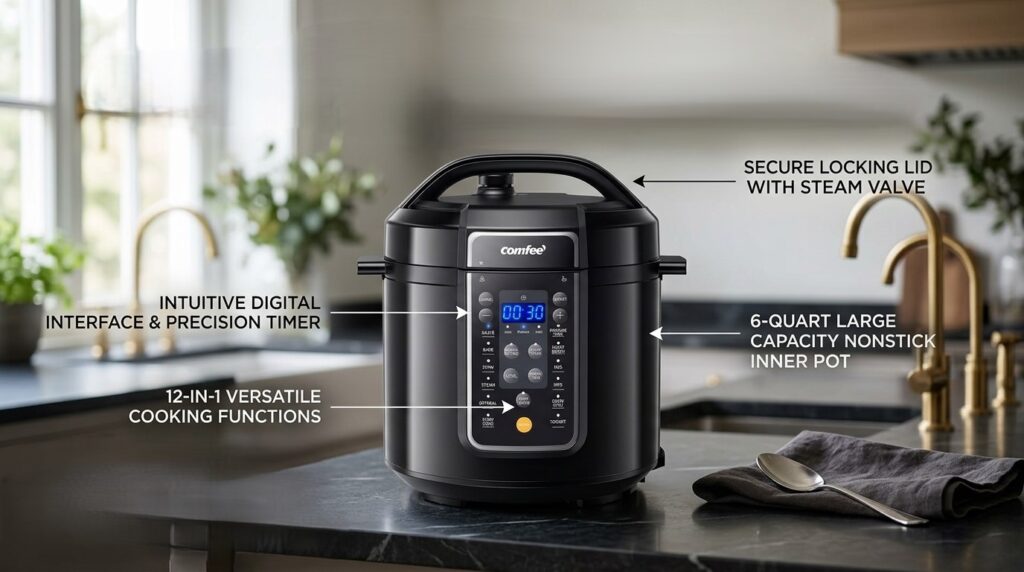
As the name suggests, this pressure cooker is designed to handle a dozen different cooking functions. These typically include pressure cooking, slow cooking, rice cooking, sautéing, steaming, warming, yogurt making, and sometimes additional presets for things like soup, poultry, or multigrain dishes. The exact list of presets can vary slightly by version, so it’s worth checking the specific product listing for the complete breakdown of included functions.
The appeal here is consolidation. Rather than switching between a rice cooker, a slow cooker, and a stovetop pan, a single appliance handles each of these tasks through different settings. This can be particularly useful in smaller kitchens or for people who are trying to reduce the number of appliances they store.
6-Quart Nonstick Inner Pot
The inner cooking pot is one of the more important components of any electric pressure cooker, since it’s the part that comes into direct contact with food. A nonstick coating generally makes cleanup easier, as food is less likely to adhere to the surface during cooking. The 6-quart size is often described as a practical capacity for preparing meals for three to six people, depending on the dish. It’s large enough to handle a whole chicken, a pot of chili, or a batch of rice for meal prepping, while still fitting comfortably on most kitchen counters.
Nonstick pots do require some care to maintain their coating over time. Using appropriate utensils and following the manufacturer’s cleaning instructions can help extend the life of the nonstick surface.
Programmable Digital Controls
Most electric pressure cookers in this category, including this one, feature a digital control panel that allows users to select cooking functions, adjust time settings, and sometimes delay the start of cooking. This kind of interface tends to appeal to people who like a degree of precision and predictability in their cooking, since it removes some of the guesswork involved in traditional stovetop methods.
Programmable settings can also be helpful for batch cooking or meal prepping, since you can set a function and walk away rather than monitoring a pot on the stove.
Safety Mechanisms
Pressure cookers, by design, build up steam pressure inside a sealed pot, which historically has raised safety concerns for some consumers who remember older stovetop pressure cooker models. Modern electric pressure cookers, including this one, typically incorporate multiple safety features such as pressure-release valves, lid-locking mechanisms that prevent opening while pressure remains inside, and automatic shut-off functions. These design elements are meant to address the safety concerns associated with older cooking equipment while preserving the speed and convenience that pressure cooking offers.
It’s always a good idea to read the included manual thoroughly before first use, as proper operation is key to both safety and getting good cooking results.
Compact and Countertop-Friendly Design
Despite offering multiple functions, this appliance is generally designed to have a relatively compact footprint compared to owning several separate single-purpose appliances. This can be a meaningful consideration for people with limited kitchen counter or storage space.
How It Can Be Used
One of the more appealing aspects of a multi-function cooker is the sheer range of dishes it can help prepare. Here are some practical ways people commonly use appliances like this one:
Weeknight Dinners: Pressure cooking can significantly reduce the time needed to cook proteins like chicken, beef, or pork compared to conventional stovetop or oven methods. This makes it a useful tool for people trying to get dinner on the table after a long workday.
Batch Cooking and Meal Prep: The 6-quart capacity lends itself well to preparing larger quantities of food at once, which can then be portioned out for the week. Grains, beans, soups, and stews are all dishes that tend to work well in this format.
Slow-Cooked Meals: For those who prefer the low-and-slow approach to cooking—think pulled pork, braised short ribs, or hearty stews—the slow cook function allows the appliance to operate more like a traditional slow cooker.
Rice and Grains: The dedicated rice setting can simplify the process of cooking rice, quinoa, or other grains without needing to monitor water levels or timing closely.
Steaming Vegetables or Seafood: Using the steam function with a compatible rack or basket, this appliance can prepare vegetables, fish, or dumplings in a way that preserves moisture and nutrients.
Yogurt Making: Some users take advantage of the yogurt setting to culture homemade yogurt, which can be a more economical and customizable alternative to store-bought options.
Sautéing Before Pressure Cooking: The sauté function allows users to brown meat or soften aromatics like onions and garlic directly in the pot before switching to a pressure or slow cook setting, which can help build flavor without dirtying an extra pan.
Warming Food: After cooking, the warm setting can help keep food at a safe serving temperature until you’re ready to eat, which can be convenient for staggered mealtimes or entertaining.
Who It May Be Suitable For
This type of appliance tends to resonate with several kinds of cooks and households:
Busy Individuals and Families: People juggling work, school schedules, or other commitments often appreciate the time savings that pressure cooking can offer, along with the ability to set a function and step away.
Small Kitchen Owners: Apartment dwellers or anyone with limited counter and cabinet space may find value in consolidating multiple cooking functions into one appliance rather than storing several separate devices.
Meal Preppers: Those who like to cook in bulk once or twice a week to prepare meals in advance may find the larger capacity and programmable settings well-suited to their routine.
Cooking Beginners: Because many of the functions are preset and guided by the digital interface, newer cooks may find this kind of appliance less intimidating than managing multiple pots and pans with varying heat levels on a stovetop.
People Interested in Reducing Appliance Clutter: Anyone looking to downsize their kitchen gadget collection without sacrificing cooking versatility might see this as a practical option.
That said, it may be less necessary for people who already own several of these appliances separately and are satisfied with their current setup, or for those who primarily cook very simple meals that don’t benefit from pressure cooking or slow cooking methods.
Important Things to Consider
Before deciding whether this appliance fits your needs, there are a few practical points worth thinking through.
Learning Curve
While digital multi-cookers are generally designed to be user-friendly, there can still be a bit of a learning curve, particularly for anyone who has never used a pressure cooker before. Understanding concepts like natural pressure release versus quick release, appropriate liquid ratios for pressure cooking, and how different foods respond to pressure can take a little practice. Reading through the included instruction manual and perhaps a few recipe guides can help shorten this adjustment period.
Counter and Storage Space
Even though this is a space-saving appliance compared to owning multiple single-function devices, it still requires a dedicated spot on the counter or in a cabinet. Measuring your available space beforehand can help avoid surprises.
Capacity Considerations
The 6-quart size is often considered a versatile middle ground, but it’s worth thinking about your typical cooking volume. Very large households or those who frequently cook for gatherings might find themselves wanting a larger capacity, while individuals or couples cooking smaller portions might find a smaller unit more appropriate. It can help to think about the largest meal you’d realistically prepare and work backward from there.
Maintenance of the Nonstick Coating
Nonstick surfaces, while convenient, do require some care. Using metal utensils or abrasive cleaning tools can shorten the lifespan of the coating. Following manufacturer guidelines on cleaning and utensil use can help the pot maintain its nonstick properties for longer.
Understanding Pressure Cooking Times
Cooking times under pressure differ significantly from conventional methods, and it can take some adjustment to get used to converting familiar recipes. Many multi-cookers come with a recipe booklet, and there are numerous online resources dedicated to pressure cooker conversions that can help bridge this gap.
Electrical and Placement Considerations
As with any electric kitchen appliance, it’s worth confirming that your kitchen setup accommodates the appliance’s power requirements and that it’s placed on a stable, heat-tolerant surface with adequate clearance for steam release.
Comparing General Categories of Cooking Appliances
To put a multi-function pressure cooker into context, it can help to compare it broadly against other common cooking appliance categories, without singling out specific competing brands or products.
Multi-Cookers vs. Single-Function Appliances: Traditional single-function appliances—like a dedicated rice cooker, slow cooker, or steamer—are often designed with a narrower focus, which can sometimes mean more specialized performance for that one task. Multi-cookers, on the other hand, trade some of that specialization for versatility and reduced kitchen footprint. Neither approach is inherently better; it largely comes down to personal cooking habits and how much variety you want from a single device.
Electric Pressure Cookers vs. Stovetop Pressure Cookers: Stovetop pressure cookers generally reach higher pressure levels and can cook slightly faster, but they require more hands-on monitoring and manual pressure control. Electric versions tend to offer more automated, hands-off operation with programmable settings, which many people find more convenient for everyday use, even if cooking times are occasionally a bit longer.
Multi-Cookers vs. Instant-Style Appliances in General: Within the broader category of electric multi-cookers, differences often come down to the number and type of preset functions, pot capacity, control interface design, and specific safety features. When comparing options, it’s worth looking closely at the presets included, the size of the inner pot, and the type of digital display, since these details can vary meaningfully between models even within the same general appliance category.
Frequently Asked Questions
Is a 6-quart capacity enough for a family? For most households of three to five people, a 6-quart pot tends to be a workable size for everyday meals. Larger families or those who frequently cook big batches for freezing or entertaining might want to consider whether a bigger capacity would better suit their needs.
Can this appliance replace a slow cooker entirely? Many electric pressure cookers, including multi-function models like this one, include a slow cook setting that functions similarly to a standalone slow cooker. While results can be quite comparable, some slow cooker purists note subtle differences in heat distribution, so it may come down to personal preference.
Is pressure cooking safe? Modern electric pressure cookers are generally built with multiple layers of safety features, including locking lids and pressure-release mechanisms, that are designed to prevent the pot from being opened while under pressure. Following the manufacturer’s instructions closely is the best way to use the appliance safely.
Does the nonstick pot require special cleaning? Generally, nonstick pots benefit from gentle cleaning methods, such as using non-abrasive sponges and avoiding metal utensils that could scratch the coating. Specific cleaning instructions are usually included in the product manual.
Can it cook frozen food? Many electric pressure cookers can handle frozen meat and other frozen ingredients, though cooking times typically need to be adjusted. It’s a good idea to consult the included recipe guide or manual for specific guidance on cooking from frozen.
How long does it typically take to cook a meal? Cooking times vary widely depending on the recipe and the function used. Pressure cooking generally reduces cooking time significantly compared to conventional stovetop or oven methods, but the total time also includes the period needed for the appliance to build up pressure and release it afterward.
Is it difficult for beginners to learn? There can be a modest learning curve, especially for anyone new to pressure cooking concepts. However, the programmable presets are generally designed to simplify the process, and many people find that they become comfortable with the basic functions after a few uses.
Conclusion
The COMFEE’ 12-in-1 Electric Pressure Cooker represents a category of kitchen appliance built around the idea of consolidation and convenience—bringing together functions like pressure cooking, slow cooking, steaming, sautéing, and more into a single 6-quart nonstick unit. For households looking to simplify their cooking routine, save counter space, or explore the time-saving benefits of pressure cooking, this type of appliance offers a reasonable amount of flexibility.
As with any kitchen tool, it’s worth thinking carefully about your household size, cooking habits, and how much value you’d get from a multi-function device versus specialized single-purpose appliances. Taking time to read through the specific features, included presets, and care instructions can help you determine whether this particular model aligns with what you’re looking for in your kitchen.